IPv4 vs IPv6: Key Differences & Why IPv4 Addresses Are Running Out
The internet relies on a fundamental addressing system to route data packets to their correct destinations: Internet Protocol (IP) addresses. Just as a street address guides mail to your home, an IP address guides data to your device. For decades, the internet has primarily operated on Internet Protocol version 4 (IPv4), a robust system that has served us well. However, with the explosive growth of connected devices and services, IPv4 is facing a critical challenge: its limited supply of unique addresses is rapidly depleting.
This impending exhaustion has spurred the widespread adoption and transition to its successor, Internet Protocol version 6 (IPv6). Understanding the core differences between these two protocols is crucial for anyone navigating the modern digital landscape, from network administrators to everyday internet users. This article will delve into what sets IPv4 and IPv6 apart and illuminate why the world is urgently moving towards the newer standard.
What is IPv4? The Internet's Original Address System
IPv4, short for Internet Protocol version 4, is the fourth revision in the development of the Internet Protocol and the first version to be widely deployed. It was designed in the early 1980s and forms the basis of the internet as we know it today.
An IPv4 address is a 32-bit numerical label assigned to each device connected to a computer network that uses the Internet Protocol for communication. These 32 bits are typically represented in "dotted-decimal" notation, where the address is divided into four 8-bit segments (octets), each represented by a decimal number from 0 to 255, separated by dots. A common example is 192.168.1.1.
The 32-bit structure means that IPv4 can support a total of 232 unique addresses. This calculates to approximately 4.3 billion unique IP addresses. While 4.3 billion might sound like an immense number, it was conceived at a time when the internet's global scale and the proliferation of devices like smartphones, smart home appliances, and IoT sensors were unimaginable. Each public-facing device or network interface requires a unique public IP address to communicate directly over the internet.
The Looming Crisis: Why IPv4 Addresses Are Running Out
The primary reason IPv4 addresses are running out is simple: the internet grew far beyond initial expectations. When IPv4 was designed, the concept of billions of people owning multiple internet-connected devices was science fiction.
Several factors contributed to the rapid depletion:
- Explosive Internet Growth: The sheer number of new users, devices, and services coming online daily has created an insatiable demand for IP addresses. From personal computers to mobile phones, tablets, smart TVs, and the burgeoning Internet of Things (IoT), every device needs an address.
- Inefficient Allocation: In the early days, IP addresses were allocated in large, fixed "classes" (Class A, B, C) to organizations. Many large blocks of addresses were assigned to institutions that didn't fully utilize them, leading to significant wastage. For instance, a Class A network could hold over 16 million addresses, often allocated to organizations that only needed a fraction.
- Lack of Foresight: The original designers simply couldn't predict the global scale the internet would reach. The 4.3 billion addresses seemed more than sufficient at the time.
To mitigate the exhaustion, several stop-gap measures were implemented:
- Network Address Translation (NAT): NAT allows multiple devices on a private network to share a single public IPv4 address. Your home router, for example, uses NAT to let all your devices access the internet through one public IP. While effective for conserving public addresses, NAT introduces complexity and breaks the end-to-end connectivity principle of the internet.
- Classless Inter-Domain Routing (CIDR): Introduced in the early 1990s, CIDR replaced the rigid classful addressing system with a more flexible method of allocating IP address blocks. This allowed for more granular and efficient distribution of addresses, slowing down the rate of exhaustion but not stopping it. You can explore how IP addresses are grouped using CIDR blocks and subnets with WorldIP.io's CIDR tools.
Despite these efforts, the Regional Internet Registries (RIRs) – organizations responsible for allocating IP addresses globally – have largely exhausted their free pools of IPv4 addresses. This means that new internet service providers and large organizations often have to buy or lease existing IPv4 address blocks, driving up costs and creating a secondary market.
Introducing IPv6: The Internet's Future
Internet Protocol version 6 (IPv6) is the latest version of the Internet Protocol, designed to address the limitations of IPv4, most notably the address space exhaustion. Development began in the mid-1990s, and it has been slowly but steadily adopted across the globe.
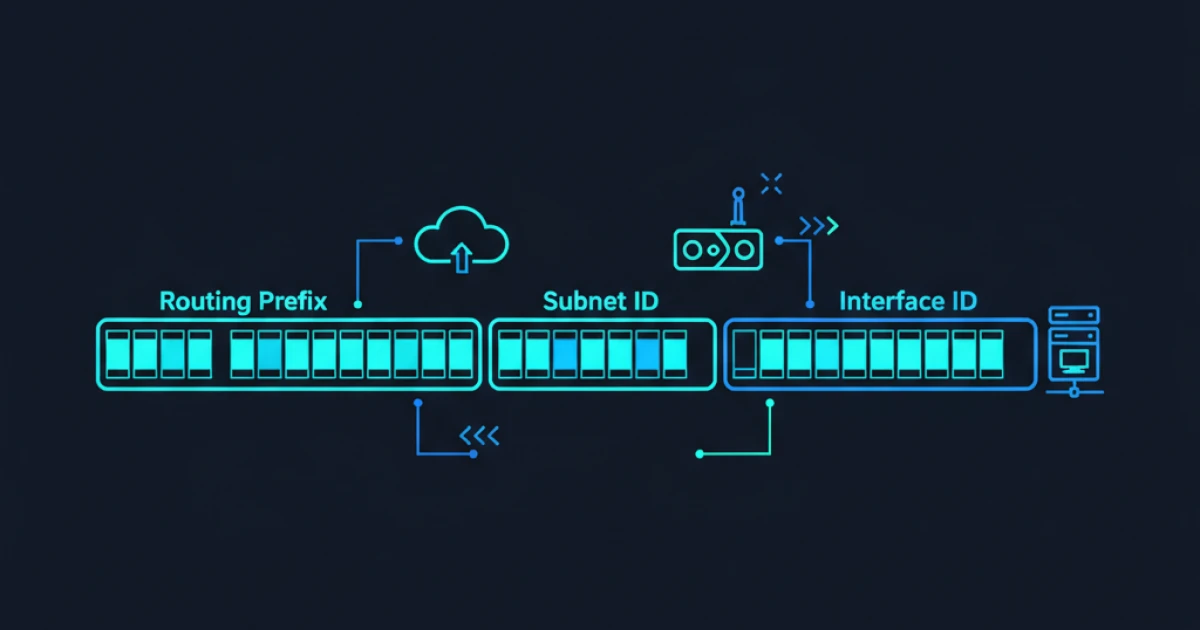
An IPv6 address is a 128-bit numerical label. This vastly larger address space allows for 2128 unique addresses, an astronomical number that equates to approximately 340 undecillion (3.4 x 1038) addresses. To put this into perspective, there are enough IPv6 addresses to assign a unique address to every grain of sand on Earth, and then some.
IPv6 addresses are represented in hexadecimal format, typically divided into eight 16-bit blocks, separated by colons. For example, 2001:0db8:85a3:0000:0000:8a2e:0370:7334. For readability, leading zeros within a block can be omitted, and consecutive blocks of zeros can be compressed with a double colon (::), so the example might become 2001:db8:85a3::8a2e:370:7334.
Beyond the expanded address space, IPv6 brings several significant improvements:
- Simplified Header: IPv6 has a more streamlined header format, which can lead to more efficient packet processing by routers.
- Stateless Address Autoconfiguration (SLAAC): Devices can automatically configure their own IPv6 addresses without a DHCP server, simplifying network management.
- Built-in Security (IPsec): IPsec, a suite of protocols for securing IP communications, is an integral part of IPv6, making secure communication a fundamental aspect of the protocol.
- Improved Multicast: Enhanced support for multicast, allowing efficient delivery of data to multiple destinations simultaneously.
- Elimination of NAT: With such a vast address space, NAT is generally unnecessary, restoring true end-to-end connectivity.
Key Differences Between IPv4 and IPv6
While both protocols serve the same fundamental purpose – identifying devices on a network – their underlying architecture and capabilities differ significantly.
Here's a comparison of the key distinctions:
- Address Length: IPv4 uses 32-bit addresses, whereas IPv6 uses 128-bit addresses.
- Address Format: IPv4 uses dotted-decimal notation (e.g.,
192.168.1.1), while IPv6 uses hexadecimal colon-separated notation (e.g.,2001:db8::1). - Address Space: IPv4 provides ~4.3 billion unique addresses. IPv6 provides ~3.4 x 1038 unique addresses.
- Configuration: IPv4 often relies on manual configuration or DHCP. IPv6 supports stateless autoconfiguration (SLAAC) and DHCPv6.
- NAT: IPv4 heavily relies on NAT to conserve addresses. IPv6 largely eliminates the need for NAT.
- Security: IPsec is optional and added on for IPv4. IPsec is a mandatory part of the IPv6 protocol suite.
- Checksums: IPv4 headers include a checksum, which routers re-calculate. IPv6 headers do not have a checksum, relying on higher-layer protocols for error checking, speeding up routing.
- Fragmentation: IPv4 routers can fragment packets. IPv6 routers do not fragment packets; fragmentation is handled by the sending host.
- DNS Records: IPv4 uses 'A' records for DNS lookups. IPv6 uses 'AAAA' records. WorldIP.io offers instant WHOIS lookups for both IPv4 and IPv6 addresses, providing details like reverse-DNS (PTR records), geolocation, and BGP information.
The Path Forward: Transition and Adoption
The transition from IPv4 to IPv6 is a complex, ongoing process, often referred to as "IPv6 deployment" or "IPv6 transition." It's not an overnight switch but a gradual migration. Many networks operate in a "dual-stack" environment, meaning they support both IPv4 and IPv6 simultaneously, allowing devices to communicate using whichever protocol is available.
Challenges to full IPv6 adoption include:
- Legacy Systems: Older hardware and software may not be IPv6 compatible, requiring upgrades or replacements.
- Cost: Implementing IPv6 can involve significant investment in new equipment, training, and configuration.
- Interoperability: Ensuring seamless communication between IPv4-only, IPv6-only, and dual-stack networks requires careful planning.
Despite these challenges, the benefits of migrating to IPv6 are clear: an almost infinite address space, improved efficiency, enhanced security, and the ability to support the next generation of internet-connected devices and services. Major internet service providers, content delivery networks, and large enterprises are increasingly adopting IPv6.
As the internet continues to evolve, understanding your network's IP configuration becomes ever more important. You can easily check what is your IP address and whether it's IPv4 or IPv6 using tools like WorldIP.io, which also provides comprehensive intelligence on IP ranges, ASNs, and organizations globally. For a deeper dive into how these two protocols compare, you can also explore our dedicated IPv4 vs IPv6 resource.
Conclusion: Embracing the Future of the Internet
The story of IPv4 and IPv6 is a testament to the internet's dynamic nature and its constant evolution. While IPv4 served as the bedrock of the internet for decades, its inherent limitations in address space have necessitated the move to IPv6. IPv6 not only solves the address exhaustion problem but also brings a host of architectural improvements that make the internet more efficient, secure, and ready for future innovation.
The transition is a global effort, and while IPv4 will likely remain in use for some time, the future of the internet is undeniably IPv6. By understanding these protocols, we can better appreciate the intricate workings of the digital world and prepare for its continued expansion.
